
Caring for Rubber Tracks in the Heat
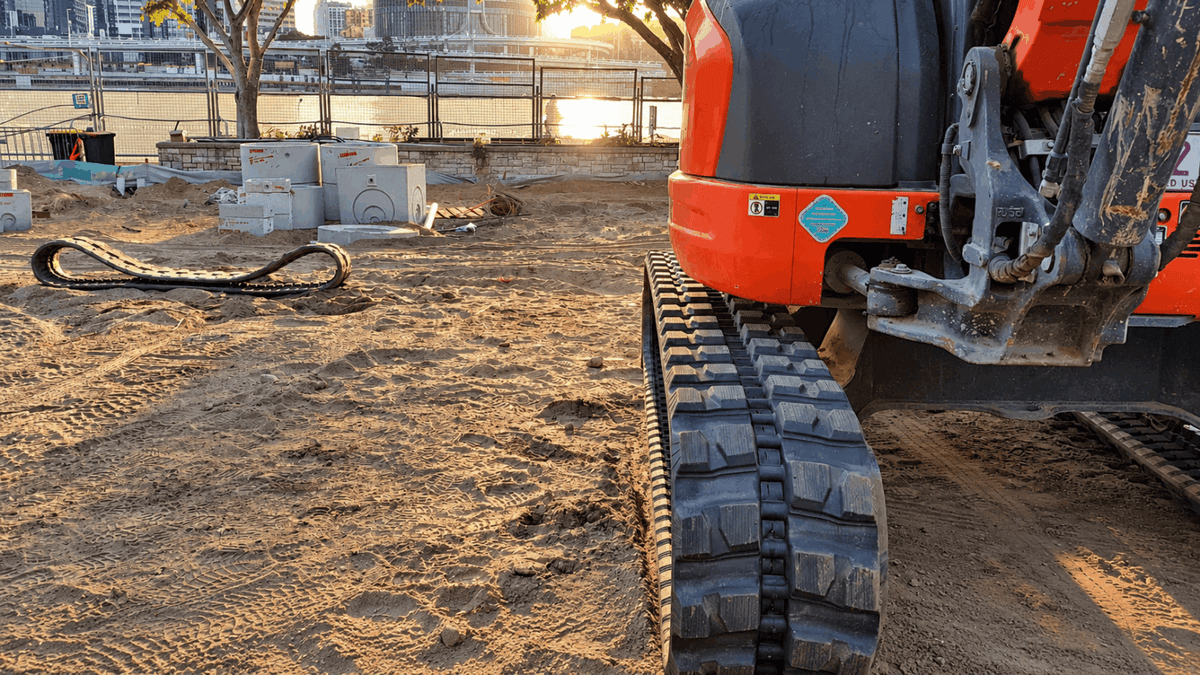
It's 38 degrees and you're on a bitumen car park trimming levels around a kerb line. The machine's going fine, but the ground is hotter than the air, the access means plenty of tight turns, and the job runs like that all week.
Nothing goes wrong on a day like that, which is the thing about hot site work. The wear just builds over the week, and by March you're looking at the tracks wondering whether you got a fair run out of them.
Why heat matters to a rubber track
Temperature and ground surface both affect how long a rubber track lasts. High heat is also on the list of things to keep tracks away from where you can, along with scrap iron, broken stone, fuel, oil and salt.
Summer is hard on a rubber track in two ways. Bitumen and concrete get a lot hotter than the air above them, and that hot, hard, abrasive surface is tough on the tread. The machine adds its own heat through friction too, mostly when it's travelling fast, spinning the tracks or turning sharply.
The ground is what it is. How you operate the machine on it is the bit you can change.
Working on hot surfaces
- Turn wide rather than skid turning. Keep both tracks moving. A spot turn on hot, hard ground scrubs the tread and the edges.
- Don't spin a track that isn't going anywhere. If the machine isn't moving, you're making heat and wearing rubber for nothing.
- Watch your travel speed. Long runs on hard surfaces build heat in the rubber and wear the tread faster.
- Keep the tracks off the kerbs. Running the side of a track along a kerb line is hard on it any time of year, and rubber that's been softened by the heat cuts and gouges more easily.
- Keep work on slopes to a minimum where you can. It puts extra load on one edge of the track.
Not every site allows for all of this, but plenty of experienced operators do as much of it as the job lets them without thinking. It's worth passing on to anyone newer, because habits set early and they're harder to shift later.
Keep the undercarriage clean
Packed material holds heat against the rubber and builds track tension without anyone touching the adjuster. In dry summer conditions, fine dust and dirt pack into the undercarriage and set hard.
Lift the machine on the bucket and blade and run the tracks to clear the material out. In abrasive material, a daily wash down with clean water is worth the few minutes.
Tension moves in the heat
Rubber and steel both react to temperature, so track tension can read differently after a machine has been working hard than when it's cool. That makes regular tension checks more important through summer, and it's worth measuring rather than going by feel.
Clean the undercarriage first so packed dirt isn't throwing out the reading, then check the measurement against your machine's manual. If the manual isn't handy, send us the make and model and we'll find the figure.
Storing spare tracks through the hot months
A spare set left out in the summer sun soaks up heat and UV while it sits in the yard doing nothing, and that takes away from its working life before it's been near a machine.
- Keep them out of the sun. Under cover beats leaning against the shed wall, every time.
- Store them flat or on their side, not hung over a rail or bracket, which puts a permanent bend in one spot.
- Get them off the ground. If the yard takes water in a summer storm, put them up on a pallet.
The set that's sat out in the weather all season is never the one you want to be fitting when a machine's waiting on it.
Bigger machines on hard surfaces: rubber pads
Rubber tracks are mostly found on excavators up to about 8 tonnes. From there up, almost every machine runs steel tracks, with rubber pads fitted when the job calls for them.
So if a larger machine is going to spend summer mostly on bitumen and concrete, rubber pads on the steel tracks are the way to go. You get rubber between the machine and the ground, and on bigger machines it's the most economical way to do it. Our TuffPad and TuffPad Plus rubber pads come in three fitting types:
- Bolt-on: suits a more permanent setup.
- Clip-on: easier to take off when the hard-surface work finishes.
- Chain-on: fits directly to the track chain.
Steel tracks with rubber pads can go on excavators down to about 3 tonnes, but on smaller machines it isn't practical and generally costs a good deal more than running rubber tracks. For those machines, rubber tracks are usually the right answer, and the operating and care tips above are where the gains are.
Sort it before the job starts
If you know hard-surface work is coming, work out the setup before it starts, not after a track lets go halfway through the job. Send us the make and model and talk it through with us, so the change happens on your timing and not while the machine's parked up waiting.
Ring us on 1300 65 11 43, email contact@tkv.com.au or visit tkv.com.au.